
A reliable furnace is essential for maintaining comfort and safety during colder months. While many heating systems operate quietly and efficiently for years, problems can develop over time due to normal wear and tear. Recognizing the warning signs of furnace trouble early can help prevent unexpected breakdowns, costly repairs, and uncomfortable indoor temperatures.
Although some minor issues may seem harmless at first, certain symptoms indicate that professional attention is needed as soon as possible. Understanding these signs can help homeowners protect their heating system and maintain consistent indoor comfort throughout the heating season.
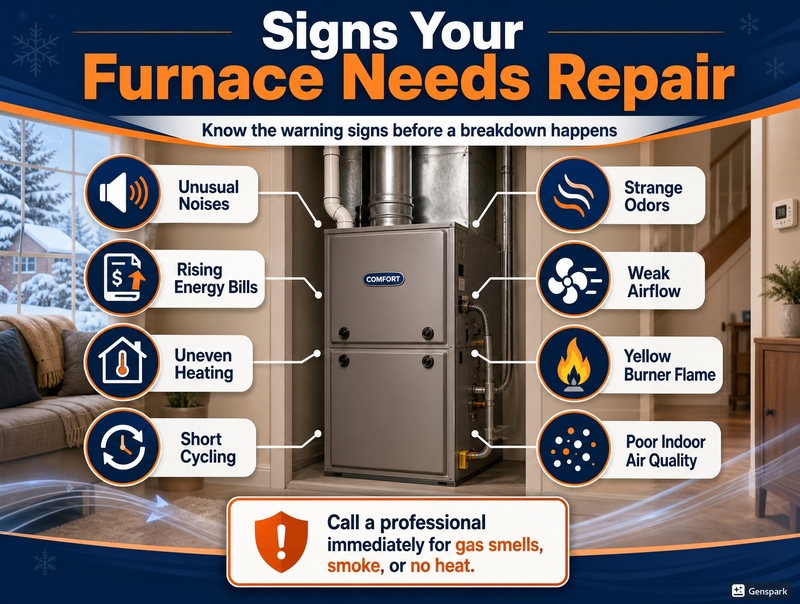
Key Takeaways
- Unusual furnace noises, odors, or weak airflow are early warning signs of system problems.
- Rising energy bills and uneven heating often indicate reduced furnace efficiency.
- Frequent cycling can signal thermostat issues, airflow restrictions, or system strain.
- Strange smells or yellow burner flames may point to safety risks and need immediate attention.
- Poor indoor air quality and excess dust can be linked to furnace performance issues.
- Furnaces near the end of their lifespan may require more frequent repairs or replacement.
Why Prompt Furnace Repairs Matter
Ignoring furnace issues can often lead to larger problems over time. What begins as a minor component failure may eventually affect the entire system.
Timely repairs can help:
- Improve heating performance
- Reduce energy consumption
- Prevent costly breakdowns
- Extend equipment lifespan
- Enhance household safety
- Maintain indoor comfort
Addressing warning signs early is often the most cost-effective approach to furnace maintenance.
Unusual Noises Coming from the Furnace
Most furnaces produce some operational sounds, but loud or unusual noises should never be ignored.
Common Sounds That May Signal Problems
Noise Type | Possible Cause |
Banging | Delayed ignition or burner issues |
Squealing | Worn belts or motor components |
Rattling | Loose hardware or panels |
Grinding | Motor or blower problems |
Buzzing | Electrical component concerns |
New or worsening sounds often indicate that parts are wearing out or failing and should be inspected by a qualified technician.
Rising Energy Bills Without Explanation
A sudden increase in heating costs may indicate that your furnace is working harder than necessary.
Potential causes include:
- Dirty components
- Restricted airflow
- Failing motors
- Aging equipment
- Burner inefficiencies
- Thermostat issues
When a furnace loses efficiency, it typically requires more energy to produce the same level of comfort.
Uneven Heating Throughout the Home
A properly functioning furnace should provide consistent temperatures throughout your living spaces.
Signs of uneven heating may include:
- Cold rooms despite thermostat settings
- Hot and cold spots throughout the house
- Certain areas receiving little airflow
- Constant thermostat adjustments
Uneven heating can result from airflow restrictions, ductwork problems, blower issues, or declining furnace performance.
Frequent Cycling On and Off
Short cycling occurs when a furnace turns on and off more frequently than normal.
Common Causes of Short Cycling
- Dirty air filters
- Thermostat malfunctions
- Overheating components
- Airflow restrictions
- Improper system sizing
Frequent cycling places additional stress on equipment and may increase energy consumption while reducing overall comfort.
Strange Odors During Operation
Some odors may be normal when a furnace starts for the first time each season, but persistent or unusual smells deserve attention.
Odor | Possible Concern |
Burning smell | Dust buildup or overheating |
Electrical odor | Wiring or component issues |
Musty smell | Moisture or airflow concerns |
Gas odor | Potential gas leak |
If you suspect a gas leak, leave the area immediately and contact the appropriate emergency services before seeking furnace repairs.
Weak or Limited Airflow
Poor airflow can prevent your home from reaching the desired temperature, even when the furnace appears to be running.
Common reasons for weak airflow include:
- Clogged air filters
- Blower motor problems
- Blocked vents
- Damaged ductwork
- Fan-related issues
A professional inspection can identify the source of airflow restrictions and restore system performance.
Yellow Burner Flame Instead of Blue
The burner flame provides important clues about furnace operation.
A healthy gas furnace typically produces a steady blue flame. If the flame appears yellow, flickering, or irregular, it may indicate combustion issues.
Potential concerns include:
- Incomplete fuel combustion
- Ventilation problems
- Burner contamination
- Carbon monoxide risks
Because combustion-related issues can affect safety, professional evaluation is strongly recommended.
Excessive Dust or Poor Indoor Air Quality
A malfunctioning furnace may contribute to declining indoor air quality.
Warning signs can include:
- Increased dust accumulation
- Dry indoor air
- Allergy symptom aggravation
- Persistent airborne particles
- Reduced ventilation effectiveness
Furnace performance and indoor air quality are often closely connected, particularly during extended heating seasons.
Furnace Age and Increasing Repairs
Even well-maintained furnaces eventually reach a point where repairs become more frequent.
Furnace Type | Typical Lifespan |
Gas Furnace | 15–20 Years |
Electric Furnace | 20–30 Years |
High-Efficiency Furnace | 15–20 Years |
If your furnace is approaching the end of its expected lifespan and requires repeated repairs, a professional assessment can help determine the most practical next steps.
When Immediate Professional Attention Is Necessary
Certain situations require prompt action and should not be delayed.
Seek professional repair immediately if you notice:
- Gas odors
- Burning electrical smells
- Smoke near equipment
- Failure to produce heat
- Repeated system shutdowns
- Unusual burner flame colors
- Loud mechanical noises
Early intervention can help prevent equipment damage and improve household safety.
Professional Furnace Repair for Reliable Comfort
Total Home Solutions provides professional heating services designed to keep homes comfortable throughout the heating season. Whether your furnace is making unusual noises, producing inconsistent heat, or showing signs of declining performance, our experienced technicians can diagnose problems accurately and recommend effective solutions to restore reliable operation.