
An HVAC system rarely chooses a convenient time to stop working. Whether your air conditioner quits during a summer heatwave or your heating system fails on a freezing winter night, sudden HVAC problems can quickly become stressful. While some issues require immediate professional attention, there are several simple troubleshooting steps homeowners can take before calling for service.
Knowing what to check can help you identify minor issues, prevent unnecessary service calls, and provide valuable information to technicians if professional assistance is needed. Here are some practical emergency HVAC tips to follow before picking up the phone.
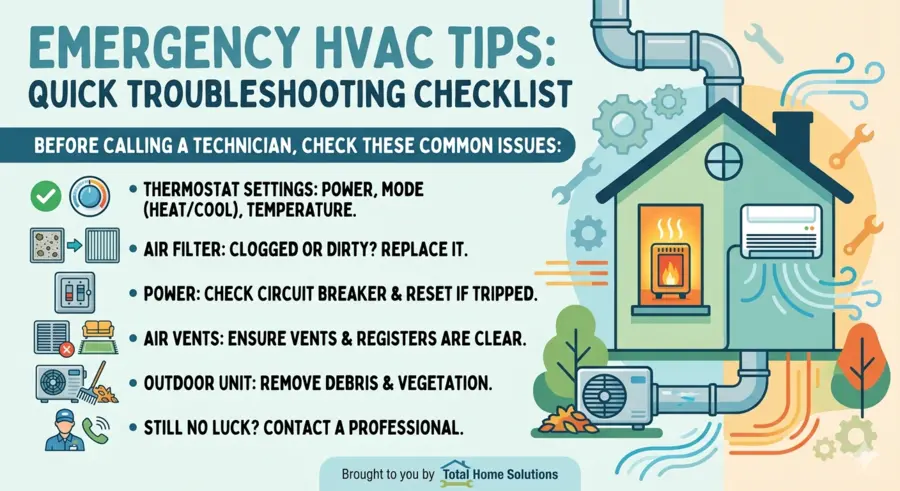
Key Takeaways
- Not all HVAC issues are emergencies; check severity before calling a technician.
- Start with basic troubleshooting like thermostat settings, air filters, and circuit breakers.
- Blocked vents, dirty filters, or outdoor debris are common causes of HVAC problems.
- Unusual sounds, smells, or smoke are warning signs that require immediate professional help.
- Always prioritize safety—avoid handling electrical or gas components yourself.
- Gather system details and error codes before calling for faster diagnosis.
- Regular maintenance helps prevent most emergency HVAC breakdowns and improves system efficiency.
Determine Whether It Is a True HVAC Emergency
Not every heating or cooling issue qualifies as an emergency. Understanding the severity of the problem can help you respond appropriately.
|
HVAC Issue |
Emergency Level |
|
Complete heating loss during freezing weather |
High |
|
Complete cooling loss during extreme heat |
High |
|
Burning smell from unit |
High |
|
Loud banging or grinding noises |
Moderate to High |
|
Weak airflow |
Moderate |
|
Uneven temperatures |
Low to Moderate |
|
Water leaking around equipment |
Moderate |
|
Unusual cycling on and off |
Moderate |
If there are signs of smoke, sparks, gas odors, or electrical hazards, leave the area if necessary and seek professional assistance immediately.
Check the Thermostat Settings
Before assuming the HVAC system has failed, verify that the thermostat is operating correctly.
Follow these simple steps:
- Confirm the thermostat is powered on.
- Check that the system is set to the correct mode (heat or cool).
- Verify the temperature setting is appropriate.
- Replace thermostat batteries if applicable.
- Review programmed schedules that may have changed automatically.
Many service calls originate from thermostat settings that were accidentally adjusted or batteries that have failed.
Inspect Your Air Filter
A dirty air filter can cause a surprising number of HVAC problems. Restricted airflow forces the system to work harder and may even trigger safety shutdowns.
Common symptoms of a clogged filter include:
- Reduced airflow from vents
- Longer heating or cooling cycles
- Higher energy consumption
- Uneven room temperatures
- System overheating
If the filter appears dirty or clogged, replacing it may restore normal operation and improve overall system performance.
Check the Circuit Breaker
Electrical issues can sometimes interrupt HVAC operation without causing equipment failure. Locate your home’s electrical panel and check whether the HVAC breaker has tripped.
Safe Steps to Follow
- Turn the breaker completely off.
- Wait a few seconds.
- Reset it to the on position.
- Monitor system operation.
If the breaker repeatedly trips, stop resetting it and contact a professional. Frequent trips may indicate a more serious electrical issue that requires expert diagnosis.
Examine Air Vents and Registers
Blocked airflow can create comfort problems and place additional strain on HVAC equipment. Walk through your home and check that vents and registers are unobstructed.
Things to look for include:
- Furniture blocking vents
- Closed supply registers
- Rugs covering floor vents
- Dust buildup restricting airflow
- Blocked return air grilles
Maintaining proper airflow allows the system to operate more efficiently and distribute conditioned air evenly.
Inspect the Outdoor Unit
For systems that include an outdoor component, a quick visual inspection can reveal obvious problems.
|
What to Check |
Why It Matters |
|
Leaves and debris |
Restrict airflow |
|
Ice accumulation |
Indicates potential malfunction |
|
Overgrown vegetation |
Limits system efficiency |
|
Damaged panels |
May signal equipment issues |
|
Standing water nearby |
Can affect performance |
Avoid attempting repairs yourself. Focus only on identifying visible concerns and clearing light debris when it is safe to do so.
Pay Attention to Unusual Sounds and Odors
Your HVAC system often provides warning signs before a complete breakdown occurs.
Sounds That Should Not Be Ignored
- Grinding
- Screeching
- Banging
- Rattling
- Buzzing
Odors That May Indicate Problems
- Burning smells
- Musty odors
- Electrical smells
- Gas-like odors
These warning signs can point to mechanical, electrical, or airflow issues that should be evaluated promptly.
Gather Important Information Before Calling
Providing accurate information can help HVAC professionals diagnose issues more efficiently.
Before making a service call, try to note:
- The type of HVAC system you have.
- The age of the equipment.
- Any error codes displayed.
- When the problem started.
- Unusual sounds, smells, or performance issues.
Having this information available can help speed up the repair process and improve communication with your technician.
Safety Tips During an HVAC Emergency
While troubleshooting can be helpful, safety should always come first.
Remember these precautions:
- Never open electrical panels inside HVAC equipment.
- Do not attempt gas line repairs.
- Avoid handling refrigerant components.
- Turn off the system if you notice smoke or sparks.
- Keep children and pets away from damaged equipment.
- Follow manufacturer safety guidelines whenever possible.
Professional technicians have the tools, training, and experience needed to safely diagnose and repair complex HVAC problems.
How to Reduce the Risk of Future Emergencies
Preventive maintenance remains one of the best ways to avoid unexpected HVAC breakdowns.
Helpful maintenance practices include:
- Replacing air filters regularly
- Scheduling annual tune-ups
- Keeping outdoor units clear of debris
- Monitoring unusual noises
- Addressing minor repairs early
- Maintaining proper thermostat settings
Routine care can extend equipment lifespan, improve efficiency, and reduce the likelihood of emergency service situations.
Professional Help When You Need It Most
Total Home Solutions provides dependable heating and cooling services for homeowners throughout the Twin Cities metro area. Whether you’re dealing with a sudden system failure, unusual HVAC performance, or preventive maintenance needs, our experienced technicians can help diagnose issues quickly and restore comfort with honest, transparent service.