
Choosing the right heating system for your home is one of the most important decisions you can make for year-round comfort, energy efficiency, and long-term savings. Two of the most common options available are heat pumps and furnaces. While both systems are designed to keep your home warm during colder months, they operate differently and offer distinct advantages depending on your climate, budget, and comfort preferences.
Understanding the differences between these heating solutions can help homeowners make a more informed decision when upgrading or replacing their existing system.
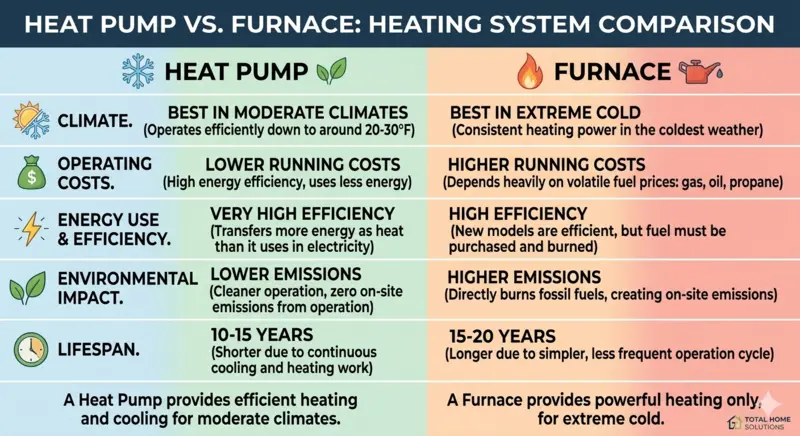
Key Takeaways
- Heat pumps are best for moderate climates and provide both heating and cooling.
- Furnaces are better for colder climates and deliver powerful, reliable heating.
- Heat pumps are generally more energy-efficient, which can help lower utility costs.
- Furnaces often have lower installation costs but require a separate cooling system.
- The best choice depends on your climate, energy costs, comfort preferences, and budget.
How Heat Pumps and Furnaces Work
Before comparing the two systems, it is helpful to understand how each one functions.
Heat Pumps
A heat pump transfers heat rather than generating it. During winter, it extracts heat from the outdoor air and moves it inside your home. During summer, it reverses the process and works as an air conditioner by removing heat from indoor spaces.
Because it performs both heating and cooling functions, a heat pump serves as a versatile year-round comfort solution.
Furnaces
A furnace generates heat by burning fuel such as natural gas, propane, or oil, or by using electricity. The heated air is then distributed throughout the home using ductwork and vents.
Furnaces are traditionally known for delivering powerful heating performance, especially during extremely cold weather conditions.
Heat Pump vs Furnace: Quick Comparison
|
Feature |
Heat Pump |
Furnace |
|
Primary Function |
Heating and Cooling |
Heating Only |
|
Energy Source |
Electricity |
Gas, Propane, Oil, or Electricity |
|
Energy Efficiency |
Very High in Moderate Climates |
High, Depending on Fuel Type |
|
Installation Cost |
Typically Higher |
Often Lower |
|
Operating Cost |
Usually Lower |
Depends on Fuel Prices |
|
Cold Weather Performance |
Less Efficient in Extreme Cold |
Excellent |
|
Lifespan |
10–15 Years |
15–20 Years |
|
Environmental Impact |
Lower Carbon Emissions |
Higher Carbon Emissions |
Energy Efficiency Considerations
Energy efficiency is often one of the biggest factors homeowners consider when selecting a heating system.
Heat pumps are generally more energy-efficient because they move heat rather than create it. For every unit of electricity consumed, a heat pump can deliver multiple units of heat energy. This efficiency can translate into lower monthly utility bills, particularly in regions with mild to moderate winters.
Furnaces, while efficient, generate heat through combustion or electrical resistance. Even high-efficiency models lose some energy during the heating process. However, modern furnaces can achieve efficiency ratings exceeding 95%, making them a strong option for colder climates.
Climate Plays a Major Role
One of the most important considerations when choosing between a heat pump and a furnace is the local climate.
Heat Pumps Perform Best In:
- Mild to moderate winter climates
- Areas with relatively stable temperatures
- Homes seeking both heating and cooling from one system
- Locations with lower electricity costs
Furnaces Perform Best In:
- Regions with long, harsh winters
- Areas experiencing frequent sub-freezing temperatures
- Homes requiring rapid heating during extreme cold
- Locations with affordable natural gas access
In colder regions, some homeowners choose dual-fuel systems that combine a heat pump with a furnace. This setup allows the heat pump to handle moderate temperatures while the furnace activates during severe cold spells.
Comparing Installation Costs
Initial investment is another key factor when evaluating heating systems.
Heat Pump Installation
Heat pumps typically cost more upfront because they provide both heating and cooling capabilities. Installation may involve additional equipment or upgrades, depending on the home’s existing HVAC infrastructure.
Furnace Installation
Furnaces often have lower installation costs, especially when replacing an existing furnace with a similar model. However, homeowners may still need a separate air conditioning system for summer comfort.
While heat pumps may require a larger initial investment, the potential energy savings over time can help offset the higher upfront cost.
Long-Term Operating Expenses
When comparing lifetime ownership costs, operating expenses deserve close attention.
Heat pumps generally have lower monthly energy costs because of their high efficiency. Homeowners in moderate climates often see noticeable savings on heating bills.
Furnace operating costs depend heavily on:
- Fuel type
- Fuel availability
- Energy prices
- Furnace efficiency rating
- Seasonal weather conditions
Natural gas furnaces often remain cost-effective in areas where gas prices are relatively low. However, fluctuating fuel costs can impact long-term savings.
Comfort and Indoor Performance
Comfort extends beyond simply keeping a home warm.
Heat Pump Comfort Benefits
- Consistent indoor temperatures
- Gentle airflow
- Reduced temperature swings
- Year-round heating and cooling
Furnace Comfort Benefits
- Faster heating response
- Higher supply air temperatures
- Strong performance during extreme cold
- Reliable operation in severe winter conditions
Some homeowners prefer the warmer air produced by a furnace, while others appreciate the steady comfort provided by a heat pump.
Maintenance Requirements
Routine maintenance helps maximize efficiency and extend equipment lifespan regardless of system type.
Heat Pump Maintenance Checklist
- Replace air filters regularly
- Inspect outdoor unit
- Clean coils and components
- Check refrigerant levels
- Schedule annual professional inspections
Furnace Maintenance Checklist
- Replace filters
- Inspect burners and heat exchanger
- Test safety controls
- Clean blower components
- Schedule annual tune-ups
Preventive maintenance helps avoid unexpected breakdowns and ensures reliable performance.
Environmental Impact
Many homeowners consider environmental responsibility when selecting HVAC equipment.
Heat pumps generally have a smaller carbon footprint because they operate using electricity and do not burn fossil fuels directly inside the home. As power grids continue incorporating renewable energy sources, the environmental benefits of heat pumps may increase even further.
Furnaces that rely on natural gas, propane, or oil produce direct emissions during operation. While modern systems are cleaner than older models, they typically have a larger environmental impact compared to heat pumps.
Which System Is Best for Your Home?
The answer depends on several factors unique to your situation.
A heat pump may be the better choice if you:
- Want both heating and cooling from one system
- Live in a moderate climate
- Prioritize energy efficiency
- Want lower environmental impact
A furnace may be the better choice if you:
- Experience extremely cold winters
- Need powerful heating performance
- Have access to affordable natural gas
- Prefer warmer supply air temperatures
Evaluating climate conditions, energy costs, comfort preferences, and long-term goals can help determine which solution aligns best with your home’s needs.
Expert Guidance for Heating System Selection
Total Home Solutions helps homeowners understand their heating and cooling options by providing honest recommendations tailored to individual comfort needs and budgets. Whether you are considering a heat pump, furnace, or hybrid heating solution, working with our experienced HVAC professionals can help ensure the right system is selected, properly installed, and maintained for reliable performance and long-term efficiency.